| Home |
| History of WASP |
| Biographies |
| Links |
| Visit the Bird Museum |
Biographies of Confirmed WASPs Attending: |
||||||||||||||||||||||||||
Jean Landis
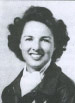
I was a graduate of WASP Class 43-W-4, Avenger Field, TX. Most memorable was dipping the wings of my P-51 Mustang as a salute to the Statue of Liberty moments before landing at Newark, NJ, for the last time! I was born in 1918 in El Cajon, Calif. I always wanted to fly, and in 1938, it was graduation night any my date asked what I would l like most of all as a graduation present. Without hesitation, I of course said, "I would love to take a flight over San Diego in a small plane." I'll never forget this first spectacular flight. My dream of flying continued with even greater intensity. In 1940 the CPT (Civilian Pilot Training) program was announced during my graduation rehearsal at San Diego State Teachers College. I was the first person to reach the Deans' Office to sign up. I had been teaching physical education when Pearl Harbor was attacked. I heard about the WASP program, applied and was accepted in the class of 43-4 at Houston, Texas. I was stationed at Long Beach, Calif., in the ferrying division, where we delivered BTs to bases along the coast. Then I was sent to Brownsville, Texas to train in the P-40, P-47 and P-51, among others. In my opinion, the P-51 was the greatest of all the planes we flew. From then on, most of my flights were delivering the P-51 from Long Beach, Calif., to Newark, N.J. After that delivery, we would frequently be assigned to deliver either the P-39 or P-63 to Great Falls, Mont. We took multiple engine aircraft training at St. Joseph, Mo., and flew the B-17 and C-47. We also spent some time in Orlando, Fla., in an officer's training program in case we were to be militarized. After deactivation, I returned to teaching full-time and found great joy and satisfaction. Since retirement, I have traveled abroad as well as toured our beautiful US of A by air, land, sea and especially in my RV. Of all my travels, I fell in love with North Idaho. I bought my own little piece of heaven only 30 miles from the Canadian border. Friends and family love it too, so I am never bored. I spend six months in Idaho and six months in California. This is truly the best of two worlds.
I was barely out of high school when I began taking flying lessons. Each hourly lesson cost half of my $18 weekly paycheck as a salesclerk at Marshall Fields store, Chicago, IL. At 20, I joined the WASP. Since we were considered civilians, I paid for my uniform along with my trip to Avenger Field, Sweetwater, TX, where we trained. I was a graduate of WASP Class 44-W-7. I was born on June 20, 1923, in Sherman, Texas. My dad would read me the latest news about Lindbergh. He would drive the family to places the aviators would perform in barnstorming shows. I took my first airplane ride in a Ford Tri-Motor at the Curtis-Reynolds Airport Airshow. I graduated high school in June 1942 and had planned to attend the Chicago Art Institute. Most of the instructors were leaving in order to contribute to the war effort. I decided to do my part in the war effort too. I took my first flight lesson on skis in a J-3 Cub. I was hired with Douglas Aircraft working in the tooling department until the plant was built. I saw a copy of the 1943 issue of Life Magazine with a WASP on the cover and an article about the WASP program. I contacted Jacqueline Cochran and got an interview. I had to get additional hours to qualify. I passed the required qualifications and physical, was released from Douglas Aircraft in January 1944. I reported to Sweetwater, Texas in class 44-7. After graduation I was assigned to the Eastern Training Command at Columbus, Miss. I flew the Beechcraft AT-10 twin engine. After deactivation, I returned to Douglas Aircraft as a mechanic in the hangar, than as a dispatcher. Douglas Aircraft was turning out many C-54s for the Army Air Corp and Navy Col. A.R. Holiday needed two copilots. Ellen Wimberly and I accepted. Then I got a chance to check out on the C-54. I was thrilled to become copilot of the big four-engine transport.
I was a graduate of WASP Class 43-W-3, Avenger Field, Sweetwater, TX. Highlights were flying in all types of aircraft in all kinds of weather – thrilling and fun – and contributing to the war effort.I was born Aug. 15, 1920, in Alameda, Calif. Later we moved to Oakland, and during my teen years we lived in the pathway of the Oakland Airport flight path. My dad loved to watch the planes, and he would take us to the airport. I got my private license in 1941, thanks to Civilian Pilot Training program. I joined the WASP in January 1943, class of 43-3 and trained first at Houston, Texas, flying the Taylorcraft , Cub, Aeronca PT-19, BT-13, BT-15, UC-78 and AT-6. After graduation, I was temporarily assigned to Love Field, then to Camp Davis, North Carolina to learn about towing targets. Then I was into a new project, radio control. I flew a multitude of planes: A-24, A-25, B-34, the ATs and PQ-8 and others. I was at Biggs Field in El Paso, Texas, when the WASP was deactivated.
I was a graduate of WASP Class 43-W-8, Avenger Field, Sweetwater, TX. I was born on Dec. 27, 1919, in North Attleboro, Mass. I enrolled in the University of New Hampshire in Durham. In my senior year, I enrolled in the Civilian Pilot Training course offered by the federal government. Each morning while the rest of the campus slept, we would fly our Taylorcraft airplanes along the coast. As the only female in the program, the men treated me with great respect and allowed me to study with them in their fraternities. We completed 40 hours of flight and 72 hours of ground school. Much of the time we flew on skis and took our final examination on skis in January 1941, and we all passed. Following graduation, I was a teacher and assistant dean at Saint Johnsbury Academy in Vermont. The next year I was assistant dean at American University in Washington, D.C. There I received my acceptance to the WASP program, in the class of 43-8. I was assigned to Douglas Air Force Base in Arizona. I reported to production line maintenance, testing aircraft, slow timing engines, ferrying mechanics to auxiliary fields, taking ground personnel to other bases in Arizona and California. I flew the AT-6, AT-17, UC-78, AT-9 and AT-11 and was checking out in the B-25 when I resigned.
I was born in 1920 in Indiana, While a senior at DePauw University, I read about the WASP program and decided that was what I wanted to do toward the war effort. After acquiring 35 solo hours in a 65 hp Aeronca Champion, I applied to director Jacqueline Cochran and was assigned to class 44-10. I was assigned to Goodfellow Army Air Field in San Angelo, Texas. After deactivation, I married one of my students, Gene Wyall, while giving flight instruction at Franklin Flying Field near Indianapolis. Being the WASP president (1994-1996) has been a challenging as well as exhilarating time to be in office. Our senior years have enhanced our reputation as true pioneers of women in military aviation. The generation of women now in the military realize what the WASP program accomplished in order for them to become part of military aviation in all branches of military service. The war years marked great advances in aviation and forever changed the image of the airplane from a daredevil machine to a necessary and useful method of travel. The Women Airforce Service Pilots will be forever grateful to General H. H. Arnold, Nancy Harkness Love and Jacqueline Cochran for their faith in us as young women to fill three objectives: to provide that women could serve as military pilots; to release male pilots for combat; and, to deliver the tens of thousands of planes coming of the production lines after 1942. We are a strong cohesive organization of women who enjoy each other’s company. And may we be able to continue this relationship for years to come.
I was a graduate of WASP Class 44-W-4, Avenger Field, TX. I served as a test pilot at training command. Fascination with the sky and a desire to fly was born in me. At age 4 I remember concocting wings out of paper, glue and anything else I could get my hands on. I even convinced myself that I could fly if I concentrated enough. I took off from the loft of my grandfather's barn one fine day. He commented later it was fortunate there was a nice soft pile of hay underneath. When my family moved from Cedar City to Provo, Utah, I was delighted to find a neat little airport practically in our back yard. Parental concerns ignored, I had a license to fly a plane before I had a license to drive a car. The call came, and I joined the WASP, went to Avenger Field, graduated and was sent to Perrin Field, Texas. My duties there were varied. I tested planes for the engineering department and ferried planes.
When World War II broke out, Gee got her chance to take wing. A 17-year-old freshman at University of California, Berkeley, when Pearl Harbor was attacked, Gee quit school and found a job as a drafts person on Mare Island. Her father, Gee Moon, who had run an import-export business on Clay Street in San Francisco, had died by that time. But her mother, Marian, a housewife, took a job as a burner-welder at the Oakland Shipyard because everyone wanted to do something. One day, Gee decided to cash her war bonds and go to Minden, NV, to learn to fly, with great hopes for perhaps getting into the WASP.
I was a graduate of WASP Class 44-W-5, Avenger Field, Sweetwater, TX. I took my Sunday school money to pay for my first flight when I was 13 and soloed myself after eight hours of instruction, because my instructor wasn't as the idled when I arrived. I earned my instructor's license and taught Naval Aviation Cadets in Portales, New Mexico. I heard of the WASP program, applied, and entered the class of 44-5. I was assigned to Columbus Army Air Field, Columbus, Miss., then to Laredo Army Air Base, Laredo, Texas, and flew the P-40, P-63 and copiloted the B26 in the Gunnery School. I was a flight instructor in the Navy V5 Program. Portales, NM, from February to July 1943; a flight instructor for the WASP from July to February 1944; a WASP trainee from February to June 1944; and then served at Columbus Army Air Base and Laredo Army Air Base until December 1944 when the WASP program was disestablished.
I was a flight-training graduate of WASP Class 43-W-2, Avenger Field, Sweetwater, TX. Iwas born Aug. 28, 1920, in San Diego, Calif. I call Oakland my hometown. I attended the University of California, Berkeley, where I graduated in 1942, majoring in political science. However, after I learned to fly in the Civil Pilot Training Program, my love of flying took precedence over everything else. My husband to be, Art Bridge, was about to joint the Marines, but on my urging, he also took the CPT. The experience changed both of our lives. He joined the U.S. Army Air Force and was immediately sent into the Pacific war theater. I heard about Jackie Cochran's program. when interviewed, I had only 75 hours and the requirement was 200 hours. I planned to accumulate the necessary hours, and while doing so, Jackie hired me as her private secretary in Ft. Worth Training Command. Then they started accepting women with below minimum hours to see how they managed in a formal USAF pilot training program, so I was accepted in the second class 43-W-2. Assigned to Love Field, Dallas, Texas, and then to Palm Springs Army Air Base, Calif. We flew a variety of aircraft, including the P-38, P-39, P-40, P-47 and P-51, which became my favorite. I accumulated over 1,000 hours of military time in single and twin engine planes, some even in a B-17 and a B-24. When deactivation was announced, we were still needed. Even though we were told that there were too many men pilots available, there were few who had fighter plane experience. After deactivation while I awaited for Art's return, I worked at Gore Field, Great Falls, Mont., at first helping returning pilots get their FAA commercial and instrument licenses and, later, giving ground school transition school in some of the planes I have flown.
I was a graduate of WASP Class 44-W-10, Avenger Field, Sweetwater, TX, the last class to receive wings. something to the effect that he should be flying the plane because he was a man, to which the pilot replied, “Honey, if you were, I’d a noticed.”
From the first day I got to have a ride in an airplane in 1940 while attending college at the University of Arkansas, I knew I wanted to learn to fly. Every chance I got, I would go to the airport to take a lesson. At about this time our country was involved in winning a war. I put aside my college education to go work in the hospital registrar’s office, Keesler Field, MS. There one Sunday when I was on duty, I read about the graduation of the first group of women pilots. I had a private pilot’s license. It seemed I met the other trainee requirements, so I flew to Dallas to be interviewed in person by Nancy Love. I was accepted and entered WASP Class 44-W-5. The training program was very thorough and challenging. The time was spent flying or going to ground school; when we all graduated it was worth the effort. I was sent to Napier Field, AL, and assigned to test work on the AT-6. After four months I was transferred to Tyndal Field, FL, to fly the B-26 towing targets for gunnery practice. There were eight WASP doing this with me. We towed a target over the Gulf while gunnery students fired from a B-24. We had some close calls. It was a sad day when we heard we were to be disbanded. I loved being a part of this program that in later years opened up more opportunities for women to fly in the military.
Josephine Keating Swift
I was born July 1, 1917, in Rochester, New York. I received a BS degree and joined the CPT at Cornell University, soloed on skies, and earned my private in May 1940. I entered the WASP program in class 43-5 at Avenger Field, Texas. I received my wings from Jacqueline Cochran on Sept. 11, 1943. I completed B-17 combat pilot training course at Lockbourne AAF, Ohio, as First Pilot. I was assigned to Buckingham AAF, Fort Myers, Fla., a flexible gunnery school, Eastern Training Command. Flew aerial gunnery missions up and down the range over the Gulf of Mexico and flew the B-17F and B-17G. I flew range estimation missions in the AT-6 and target towing in the B-26 stripped - AT-23. Then on to Roswell AAB, N. M., flying as engineering test pilot for B-17F and G Western Training Command. I attended the Aero Medical Lab, Wright-Patterson for high altitude training and the USAAF School of Applied Tactics, Orlando AFB for officers training. Flora Belle Smith Reece I was born on Oct. 21, 1924, in Sayre, Okla. In watching the birds on the farms where I lived for the first 10 years of my life, I wanted to fly. So the desire had been there as long as I can remember. I learned to fly before I learned to drive a car. I worked as operations officer and bookkeeper at Nuckols Airport in Oklahoma City before I joined the WASP program and after deactivation until I got married. We were allowed to fly as instructors with a commercial license. I entered the WASP program in November 1943 and was in class 44-4. I was stationed at Victoria, Texas, and flew non-flying officers and news personnel where they needed to go. Doing mail runs to Matagorda Island in Texas was fun. I also took the chaplain to the island on some Sundays. I was sent to B-26 copilot school in Harlingen, Texas, where we towed targets for the gunnery school. While at Harlingen the deactivation orders came and I was sent to Enid Air Force Base in Oklahoma because it was near my home. At Enid we tested planes that had been repaired after accidents and slow timed the engines in the repaired aircraft for the male cadets to fly. Madge Leon Moore I was born Jan. 22, 1922, in Rule, Texas, in what the natives called West Texas, halfway between Abilene and Wichita Falls. I started school there and finished in Haskell, nine miles to the east. I started flying that summer of 1939. The only airfield in the area was at Stamford, 13 miles away. In order to finance a new plane, the only instructor at the field was selling 10 hours flying time for $50. My father gave him $50 and used the first hour to distribute circulars of coming attractions at the movie theater. When he told me about it, I said, "Oh, let me have the rest of the time!" The next Sunday mother and daddy took me to Stamford for my first lesson in the Aeronca 65. Soon I was driving to Stamford at 6 a.m. several times a week for dual instructions. I soloed in my prescribed time and took my mother for her first plane ride ever. Upon graduation from Southern Methodist University, I answered Jacqueline Cochran's appeal for woman pilots and was assigned to class 44-4. The climate and terrain around Avenger Field held no surprises for me: I had gone to the fourth grade in Sweetwater. On May 23, 1944, my father proudly pinned my wings on me. On D-Day, June 6, 1944, I reported to Perrin Field, Sherman, Texas, a basic flying school. Alyce Stevens and I were the first WASP to report there. We did various jobs including engineering test hops and slow-time on new engines, ferrying primary planes (mostly to Kelly Field for storage), administrative flying, and instructing instrument flying to instructors (after having returned to Avenger for advanced course in instrument flying). Among the planes I flew: Aeronca 65, PT-19, PT-17, BT-13 and AT-6, plus two hours in the AT-11. I met my future husband at Perrin Field, when he offered to carry my parachute. After deactivation, Stanley Moore and I were married. He remained on active duty, and I concentrated on being an Air Force wife and mother. RaVenna Leigh Fisher Baker I was a graduate of WASP Class 44-7-T . I was born Jan. 28, 1921 in Cedar City, Utah, where I graduated from Cedar City High School. I graduated from the University of Utah in 1943. I started my flying career while attending college in a course offered by the Civil Air Patrol. I was issued a private pilot's license in January 1941. While attending the University of Utah, I applied to the War Department to join the WASP. In December, I received a telegram from Jacqueline Cochran saying that I was accepted into the WASP for the January class. I reported to Avenger Field in Sweetwater, Texas, for basic training. After training, I transported airplanes from the factory to base and from base to the repair station. I loved flying the AT-6, the biggest airplane we flew. It had retractable landing gear and instrument instruction. When veteran status was granted 35 years later, it was a joyful day for me when I received my honorable discharge from the government. For 18 months, my husband, Al Fisher, was a member of the Army Airforce as well. He flew "The Hump" from India to Burma and over the Himalayan Mountains. When he came home, we started our family of four children. I was widowed and later remarried. I was self-employed as I owned and managed Supply Store in Las Vegas and owned and operated Rexall Pharmacy in Champaign, Ill. Betty C. Tackaberry Blake Virginia Lee Warren Doerr Dorothy Kocher Olsen Ruth E. Schumaker
Photos courtesy of Texas Woman's University and Women in Military Services for America Memorial Foundation. Biographies were adapted from the book "Out of the Blue and Into History" by Betty Stagg Turner (Aviatrix Publishing, 2001) and from information compiled by the Women In Military Service For America Memorial Foundation, Inc. and Texas Woman's University. To download biographies published in "Out of the Blue and Into History" download this pdf (3.6 MB) |